


Anatomy of a PVC Pipe
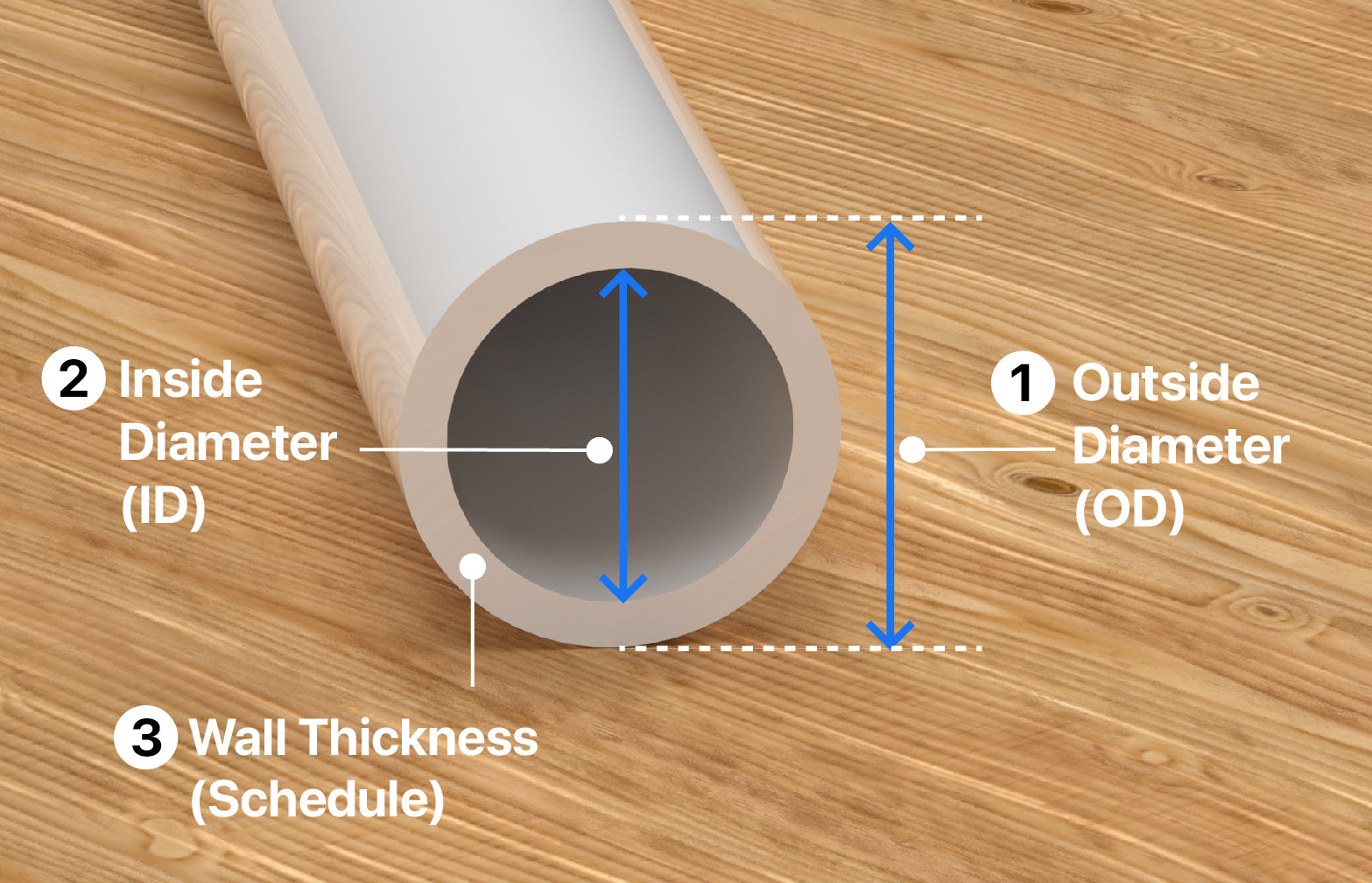
To understand PVC size basics, it's essential to know all the names of the elements that make up a PVC pipe:
- Outside Diameter (OD): Refers to the measurement taken from one outer edge of the pipe to the other, spanning its full diameter.
- Inside Diameter (ID): Represents the measurement of the inner diameter or 'bore' of the pipe, from one side directly to the other.
- Wall (Schedule): Describes the thickness of the pipe wall, measured from its inner surface to its outer surface.
PVC Pipe Measuring Methods
Download our PVC Size Guide
You can download our easy-to-use PVC Size Guide, a print-to-scale solution that lets you physically compare your PVC pipe to each PVC pipe size.
Download PVC Size Guide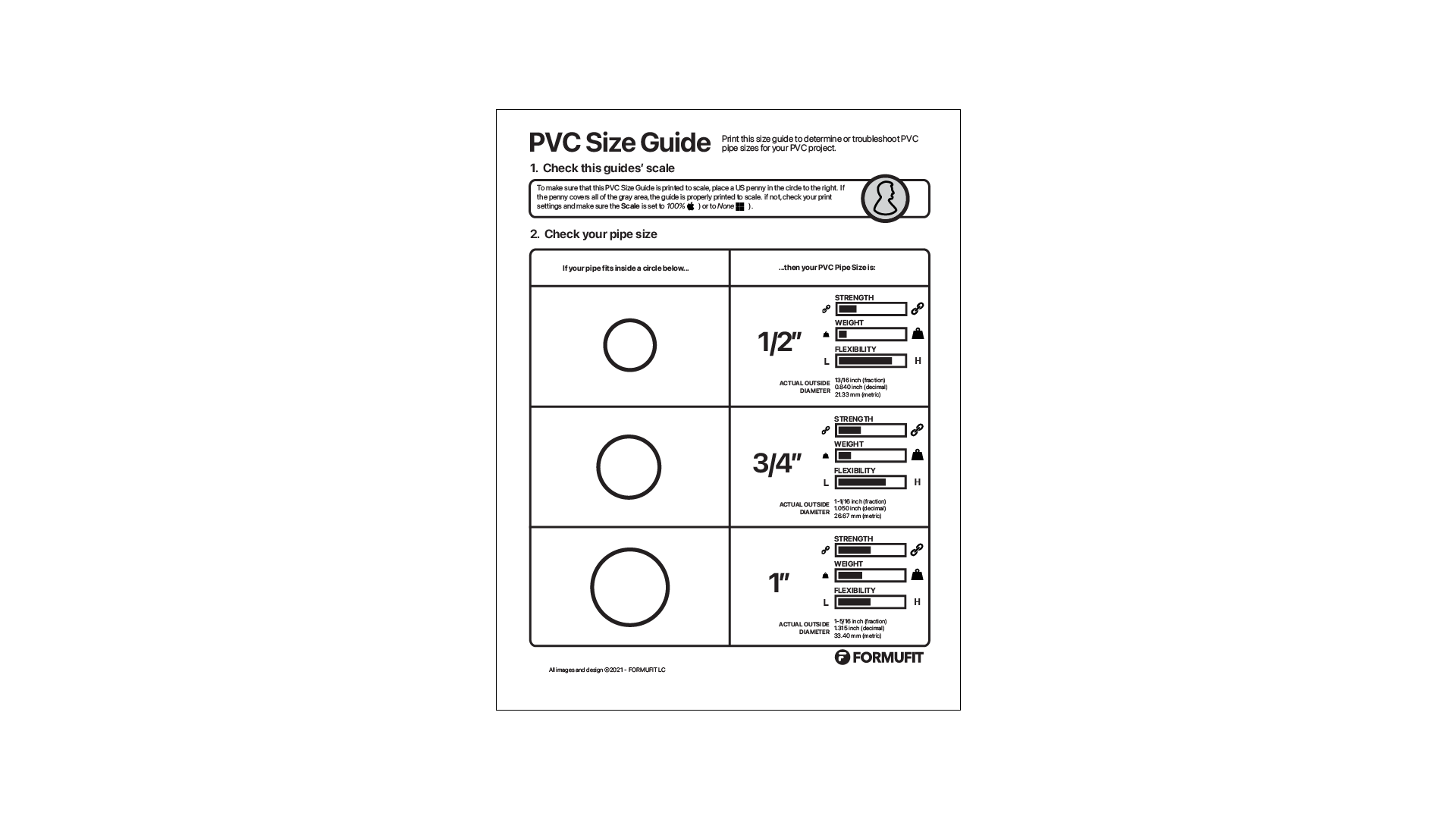
Read the PVC Pipe Markings
Every plumbing-grade manufacturer marks their pipes differently; however, you can view the PVC Pipe Markings page to learn how to read them.
How to Read Pipe Markings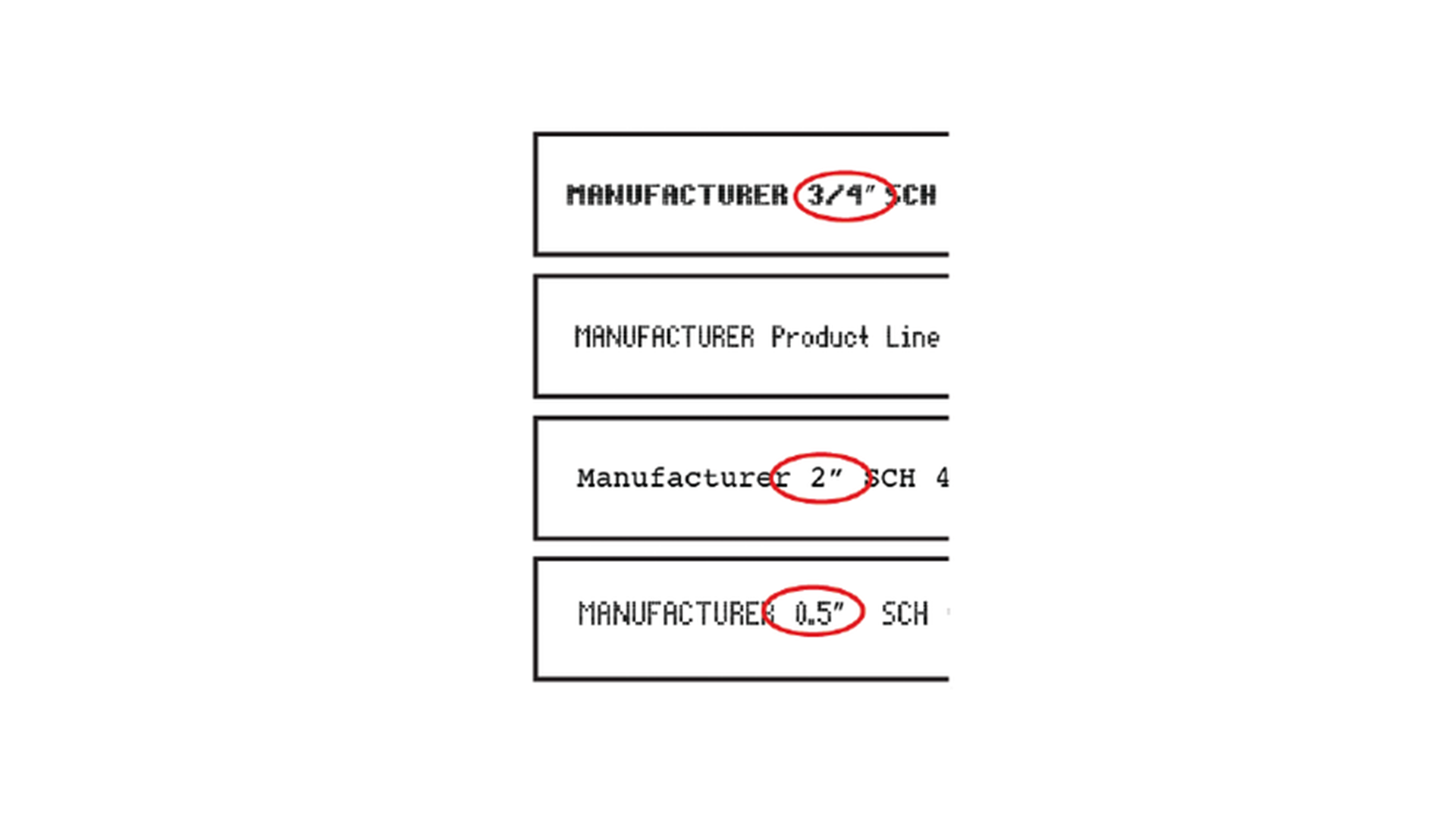
Compare PVC Pipe to Objects
View our Pipe Size Comparison chart, which will give you an idea of how each PVC Pipe Size diameter equates to everyday household objects.
View Pipe Comparison Chart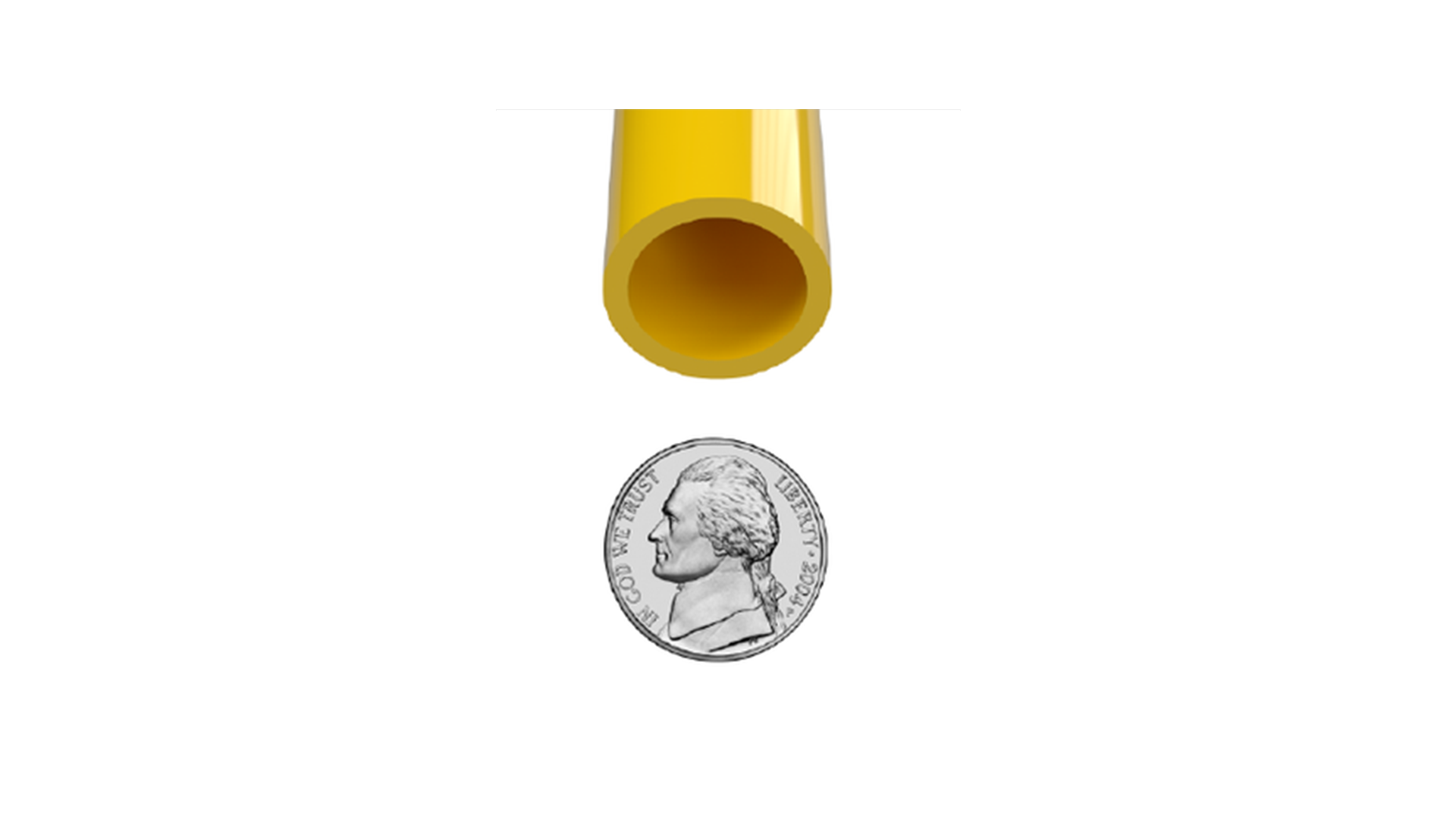
Verify PVC Size by Dimensions
You can view our PVC Pipe Dimensions chart and physically measure your pipe up against actual PVC pipe dimensions for each size to help locate your size.
PVC Size Dimensions Chart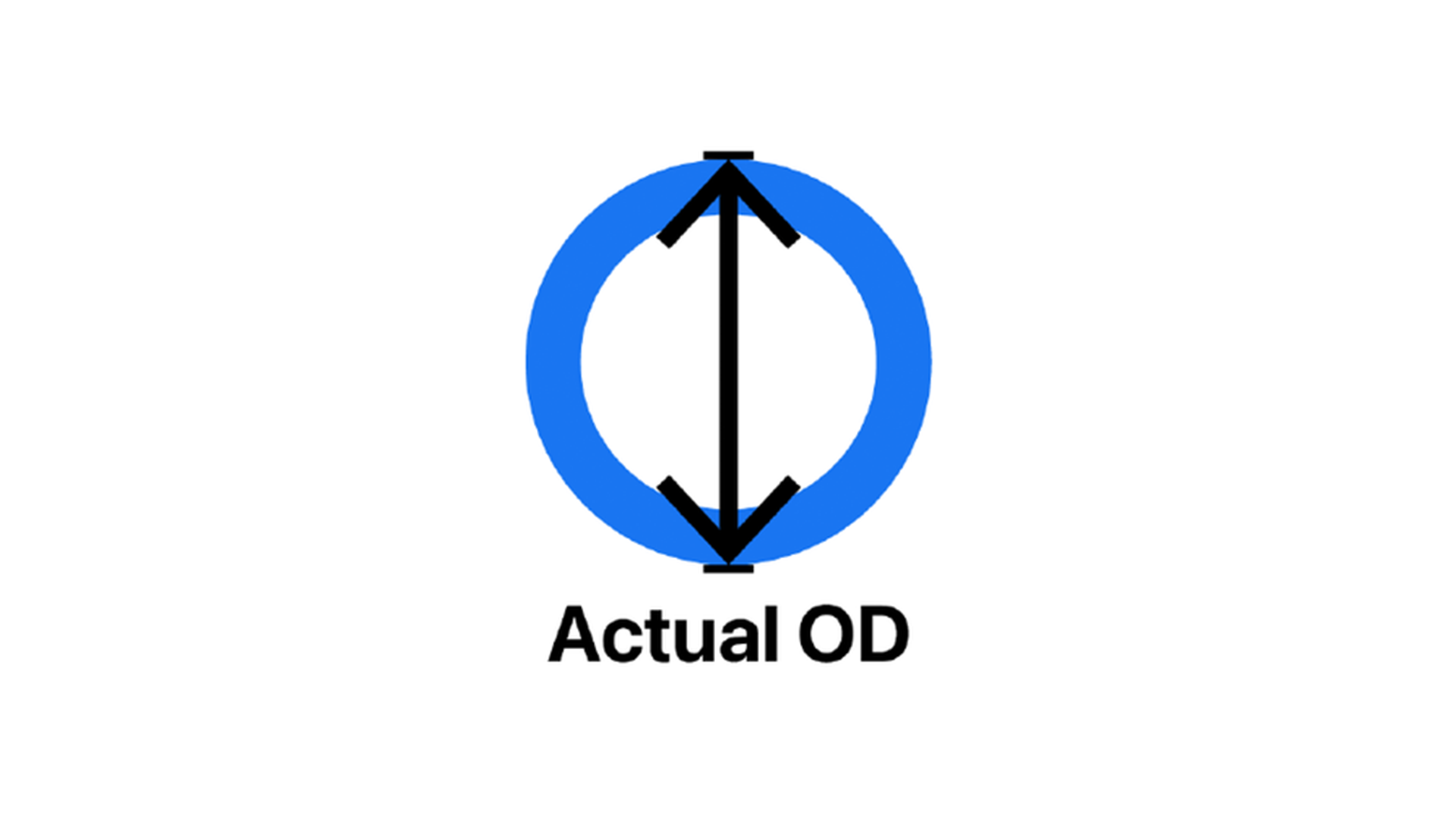
Don't measure the pipe outside diameter.
The outside diameter (OD) is not used to find the PVC pipe size; instead, the inside diameter (ID) of the pipe is used, measuring between the inside edges.
Learn more about ODPVC schedule is important for some products.
PVC Schedule refers to the thickness of the PVC pipe wall. This thickness can become important when using internal fit products and accessories.
Learn More about Pipe ScheduleNot all types of pipe and tube are compatible.
Some pipes are designed for specific applications, such as water or sewer lines. Make sure you choose the right type of PVC pipe for your project.
Learn More about CompatabilityThe correct way to Measure
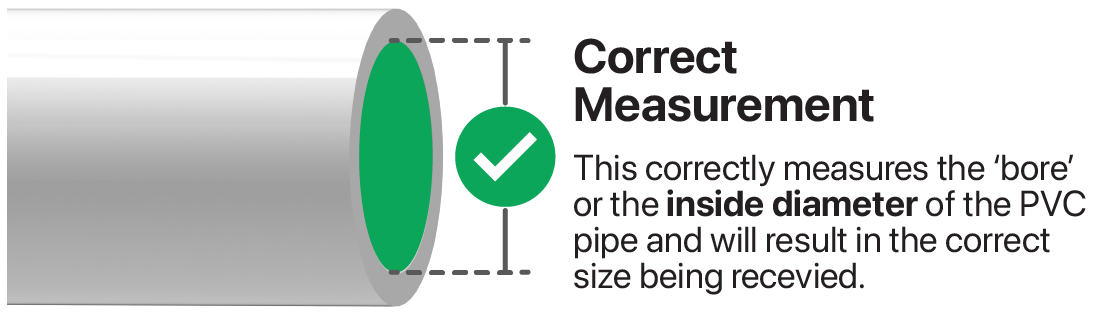
PVC pipe follows the Nominal Pipe Size (NPS) naming convention, which identifies the diameter of the hole of a PVC pipe with a closely related dimensional number for its size. Therefore, the Pipe Size for all FORMUFIT products uses the inside diameter or ‘bore’ of the PVC pipe that it fits. This method is the correct way to measure the PVC pipe size you need.
The incorrect way to Measure
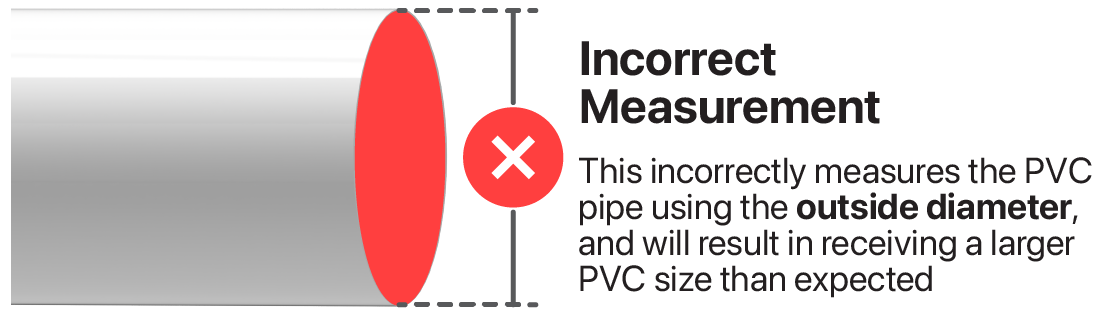
You should never use the outside diameter of the pipe to determine your PVC pipe size unless you are using a reference chart. If you measure the outside diameter of your PVC pipe and order based on that measurement, you will almost always receive the next PVC size up. Never order PVC products based on the outside diameter unless you are referencing a PVC pipe dimensions chart.


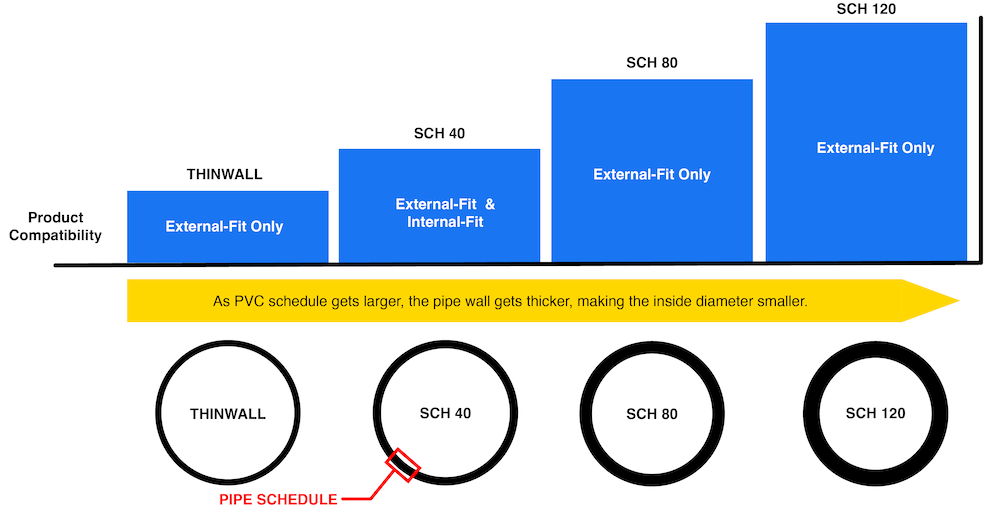
As the PVC Schedule number increases, the pipe wall gets thicker, which in turn makes the inside diameter smaller. This charts shows what FORMUFIT products are compatible with each Schedule of PVC pipe.
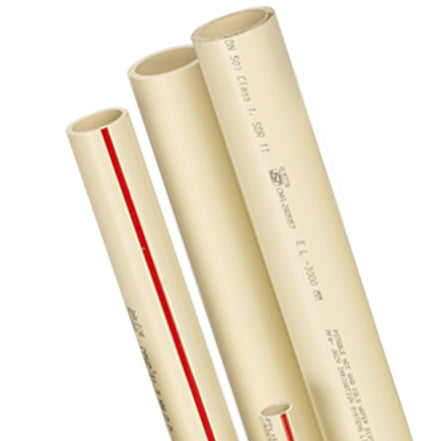
CTS/CPVC Pipe
The most commonly confused non-compatible pipe is Copper Tube Size (CTS) plastic pipe, also known as CPVC which uses an entirely different sizing system. For more information on CPVC, please see our CPVC Incompatibilities Pagefor more information.
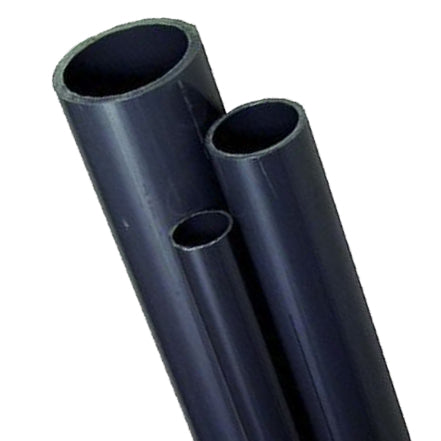
ABS Pipe
While ABS pipe is size-compatible with most FORMUFIT products, it must use a unique transitional cement or the pipe-to-fitting connection must be screwed together for a secure connection. ABS pipe is also not recommended as a structural pipe as it is very brittle and easily broken.
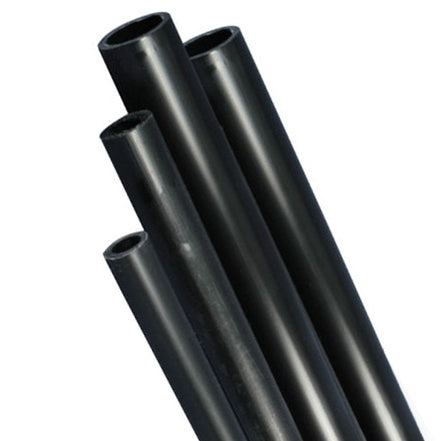
Polypropylene Pipe
Polypropylene pipe, or poly pipe, is commonly used for sprinklers and irrigation systems. It is flexible yet fragile and matches Schedule 40/80 dimensions. However, it connects loosely and is designed for compression or barbed connectors, not slip fittings. It is incompatible with PVC cements and cannot be fusion welded.
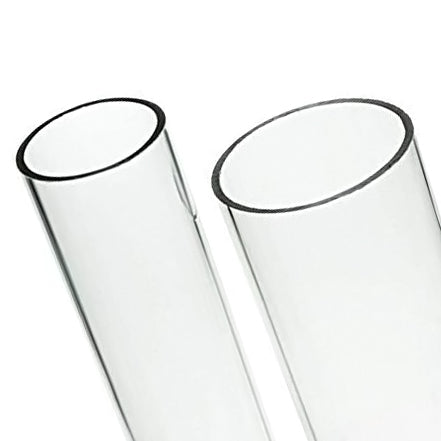
Acrylic Tube/Rod
When it comes to plastic-based materials, acrylic tubes and rods may seem similar to PVC fittings and accessories at first glance. However, it's important to note that these two materials are not dimensionally compatible, as acrylic tubes are measured based on their outer diameter.
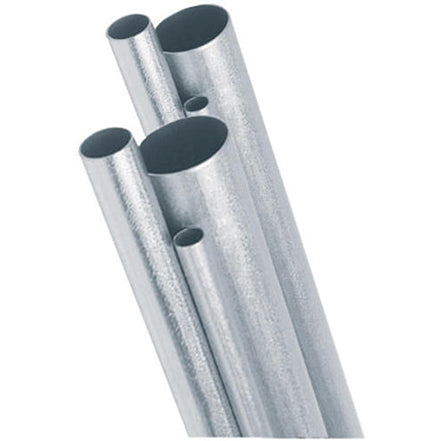
Steel Conduit/Pipe
Some steel pipes share the same outside diameters as corresponding PVC pipe sizes and are size-compatible, but there is no way to connect the steel pipe to the plastic PVC fitting. Metal EMT conduit uses a separate measurement system and will not fit PVC fittings or accessories.
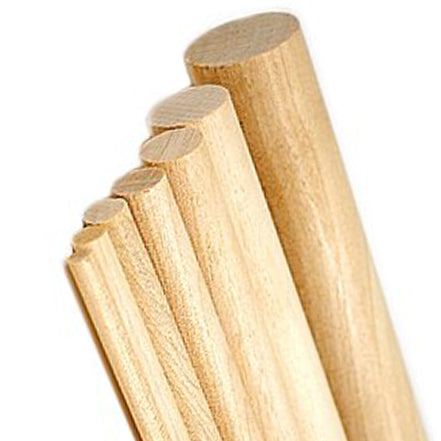
Wooden Dowels
Wooden dowels won't work with PVC fittings as they use a different measurement system. Dowels are measured by their outer diameter, which does not align with the sizing used in PVC. This mismatch means that wooden dowels won't fit securely in PVC fittings, leading to poor connections.
PVC Size FAQ
PVC pipe size refers to the inside diameter of the pipe, not the outside diameter (OD). The sizing follows the Nominal Pipe Size (NPS) system, which identifies the approximate internal bore.
Measuring the outside diameter gives an inaccurate size. PVC fittings and pipe are designed around the inside diameter, so measuring by OD will result in ordering a size too large.
The schedule number describes the wall thickness. Schedule 80 PVC has thicker walls than Schedule 40, making it stronger but with a smaller inside diameter. Most FORMUFIT internal-fit products are compatible only with Schedule 40 pipe.
Yes. FORMUFIT fittings work with most plumbing-grade Schedule 40 PVC pipe. However, always confirm that the pipe size and schedule match the fitting type before assembly.
No. Some materials such as CPVC, acrylic, polypropylene, or ABS use different sizing or wall thickness systems and may not connect properly. Always verify compatibility before using non-PVC materials.
FORMUFIT provides a printable PVC Size Guide that allows you to compare your pipe directly to scale. You can also consult the PVC Pipe Dimensions Chart for exact measurements.
Pipe markings list the nominal size, schedule, and material type. Visit the How to Read PVC Pipe Markings page to learn how to interpret these labels.
FORMUFIT outlines four methods:
- Download and print the PVC Size Guide
- Read the pipe markings
- Compare your pipe to household objects using the comparison chart
- Check actual measurements with the PVC dimension chart
nternal-fit parts slide into the inside of the pipe, so wall thickness directly affects the fit. Only Schedule 40 provides the proper internal diameter for FORMUFIT’s internal-fit components.
Use the PVC Pipe Dimensions Chart to match your OD measurement to the correct nominal pipe size.
Not recommended. Although ABS is dimensionally similar to PVC, it’s more brittle and prone to breaking. It should only be used with transitional cement or threaded connections.
No. CPVC (Copper Tube Size) pipe uses a different measurement system and will not fit PVC fittings. See the CPVC Incompatibility Page for details.
These materials are measured by their outer diameter, unlike PVC which uses inside diameter sizing. As a result, their dimensions don’t align with PVC fittings.